Beginner's Guide to Keeping Your First Houseplant Alive
Most first houseplants don't die of neglect. They die of kindness: a well-meaning watering can, a dark corner, a decorative pot with no hole in the bottom. The good news is that houseplants are far more forgiving than their reputation suggests, and the habits that keep one alive take about five minutes a week. Here's how to choose something you can actually keep, what to buy with it, and what to do during the first three months.
Five plants that forgive almost anything
If this is your first plant, buy one that copes with a forgotten watering and a window that never gets direct sun.
- Snake plant (Sansevieria) — thick, upright leaves that tolerate low light and long dry spells. Water it when the compost has been dry for a week or more, and not before.
- Pothos, or devil's ivy (Epipremnum) — a trailing vine that grows in most light conditions and tells you when it's thirsty: the leaves soften and droop, then perk up after a drink.
- Spider plant (Chlorophytum) — arching striped leaves that send out babies you can pot up and give away. Happy in most light levels and hard to overwater.
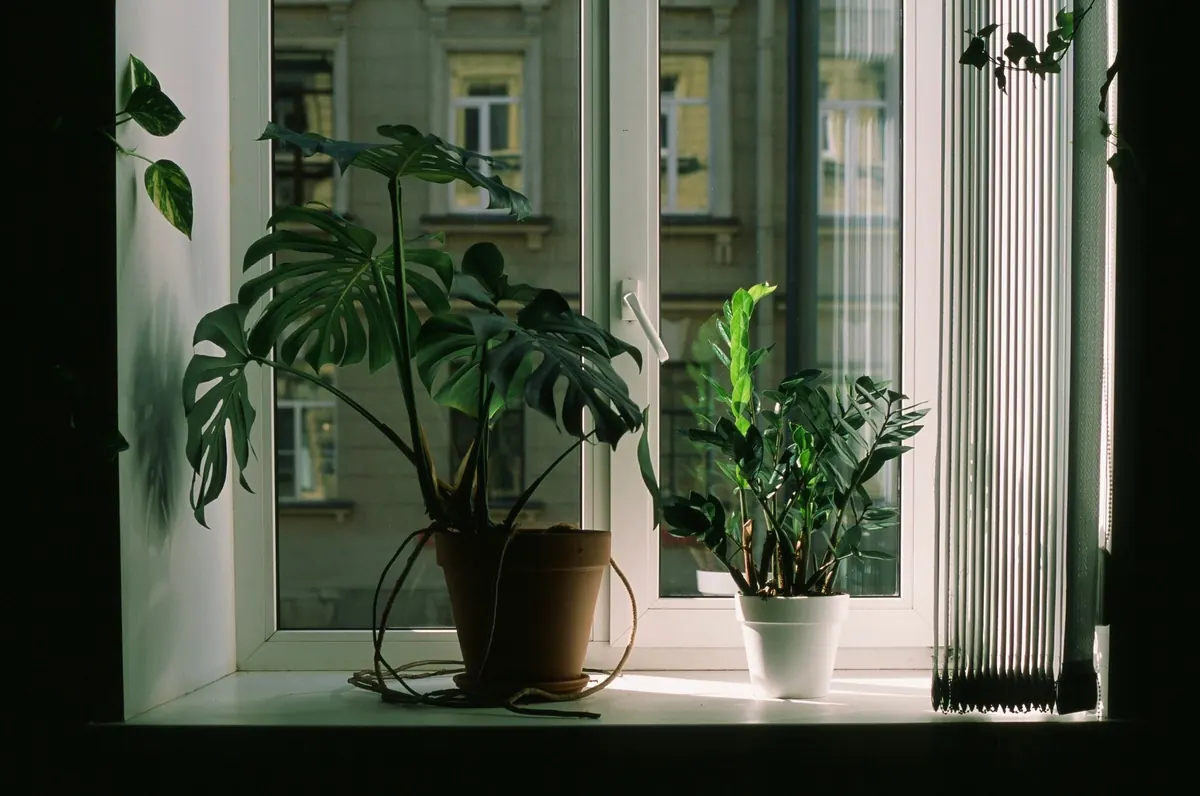
- ZZ plant (Zamioculcas zamiifolia) — glossy, almost plastic-looking leaves on stems that store water. It minds too much water far more than too little.
- Peace lily (Spathiphyllum) — flowers in shadier spots and droops dramatically when dry, which makes it a useful teacher if you can resist watering on a fixed schedule.
A word on pets and small children: check before you buy. Spider plants are generally considered safe, while snake plants, pothos, ZZ plants and peace lilies are not, so keep them out of reach or pick something from a pet-safe list instead.
The kit that actually matters
You need less than the garden centre shelves suggest. A pot with a drainage hole, a saucer and a bag of houseplant compost will get you started.
- A pot with a drainage hole, 2–3cm wider than the rootball
- A saucer or a waterproof inner pot to catch the runoff
- Houseplant compost — not garden soil, which compacts solid in a pot
- A small watering can with a narrow spout, so you can water around the edge rather than into the middle of the plant
- A cloth or soft sponge for dusting leaves
- Optional: an inexpensive moisture meter, if you don't trust your finger
Skip the decorative outer pot with no drainage, at least to begin with. Water sitting in the bottom of it is the most common reason a new plant rots.
Light first, everything else second
Find the brightest spot in your home that isn't in full, direct midday sun and put the plant there. In British homes that usually means within a metre or two of a window, with a sheer curtain if the sun is strong. South-facing windows are generous in winter and fierce in summer; east-facing is gentle; north-facing is workable for snake plants, ZZ plants and pothos.
A plant that's stretching — long gaps between leaves, pale growth leaning towards the glass — is asking for more light. Move it closer and turn it a quarter turn every week or two so it grows evenly rather than lopsided.
Watering, or how most first plants die
Check before you water. Push a finger about 3cm into the compost. If it feels damp, wait. If it's dry, water thoroughly until it runs out of the drainage hole, then tip away whatever collects in the saucer.
How often that happens depends on the plant, the pot, the light and the season. A snake plant in a shady corner might go six weeks between waterings in winter. A peace lily in a bright kitchen might want a drink twice a week in July. Don't decide with a calendar; decide with your finger.
- Water less in winter. Growth slows, so compost stays wet for longer. Most houseplants need roughly half the water they take in summer.
- Keep plants away from radiators and out of cold draughts from doors and windows. Both dry and stress the leaves.
- Aim for the edge of the pot, not the centre. Water sitting in the crown of a plant rots it quickly.
- Don't feed a new plant for a month or two. It's usually already growing in compost with feed mixed in, and overfeeding is its own kind of damage. In winter, most plants need no feed at all.
The first three months
Weeks one and two
Leave it alone. Don't repot, don't feed, don't move it from room to room each day. Let it settle into its new light and temperature. If it arrived wrapped in plastic or stood in a decorative sleeve, take that off so air can reach the compost.
Month two
By now you'll have a feel for how quickly the compost dries. Start a routine: check every plant on the same day each week, water only the ones that need it, and wipe the leaves with a damp cloth if they're dusty. Dust blocks the light the plant is working so hard to catch.
Month three
Look for signs it's content — new leaves, firm stems, roots just appearing at the drainage hole. If roots are crowding the pot and growth has stalled, that's the moment to move it into something one size bigger, in fresh compost.
Small problems, quick answers
- Yellow lower leaves and soggy compost: too much water. Let it dry out and hold back.
- Crisp brown tips: usually dry air, and in some areas hard tap water. Peace lilies are the usual culprit, and filtered or rainwater suits them better. Grouping plants together raises humidity more reliably than misting.
- Pale, stretched growth: not enough light.
- Tiny black flies around the compost: fungus gnats, which thrive in permanently wet soil. Let the top few centimetres dry out between waterings.
- Fine webbing or sticky residue on leaves: likely pests. Move the plant away from the others and ask someone who knows before reaching for a spray.
Keep asking, keep swapping
Every grower has killed something. The difference between a windowsill full of plants and a hobby that ended in the bin is usually a willingness to ask. Take a photo, describe where the plant sits and how often you water it, and put the question to people who have grown it before — a neighbour, a local gardening group, a plant swap.
Start with one plant rather than six. Get through three months with it alive and you'll have learnt more than any guide can tell you: how your light behaves, how your compost dries, and what your plant looks like when it's happy. Then buy the second one.
Photo: neelam279 / Pixabay
You Might Also Like
A practical checklist for organising a neighbourhood cutting and seed swap, covering format, venue, plant health rules, labelling, how to run the day, and the follow-up that keeps people coming back.
A step-by-step guide to bringing outdoor plants inside before the first frost, cutting back on water and feed, and keeping tender species healthy through a UK winter.